What happens when a painting refuses to remain a painting? Instead, it breaks all the rules by stretching beyond the surface and outside the boundaries. Is it still a painting when non-traditional materials are sculpted with layers, protrude, crack, overlap, and even collide with each other? Philadelphia artist Jim Brossy is known for his collection of wildly expressive, highly textured mixed-media assemblage paintings that incorporate both traditional art materials and industrial elements. Tar, latex, cement, wax, string, and steel appear alongside acrylic, pastel, pencil, and oil, creating surfaces that carry both a literal and figurative gravity to the subjects.
Brossy created the term Crackpot Realism, which, according to him, offers a new perspective using a variety of materials involving relationships concerned with social relevance and emotional experiences. In Crackpot Realism, there is no distinction between living and making art. Painting is not a representation of life, but a real thing, an object in real space, that can be experienced as a picture. Crackpot Realism allows for interaction between physical materials and mental associations. Some materials allow for spontaneity and immediacy, while others are slow, laborious, and resistant. Each carries its own distinct sensibility. These materials generate rhythms and patterns that respond to the same natural forces that shape the world around us. Assemblage and collage are incorporated to highlight the qualities of each material, rather than to replace traditional painted or drawn elements. Text is used as both a visual and a political statement.
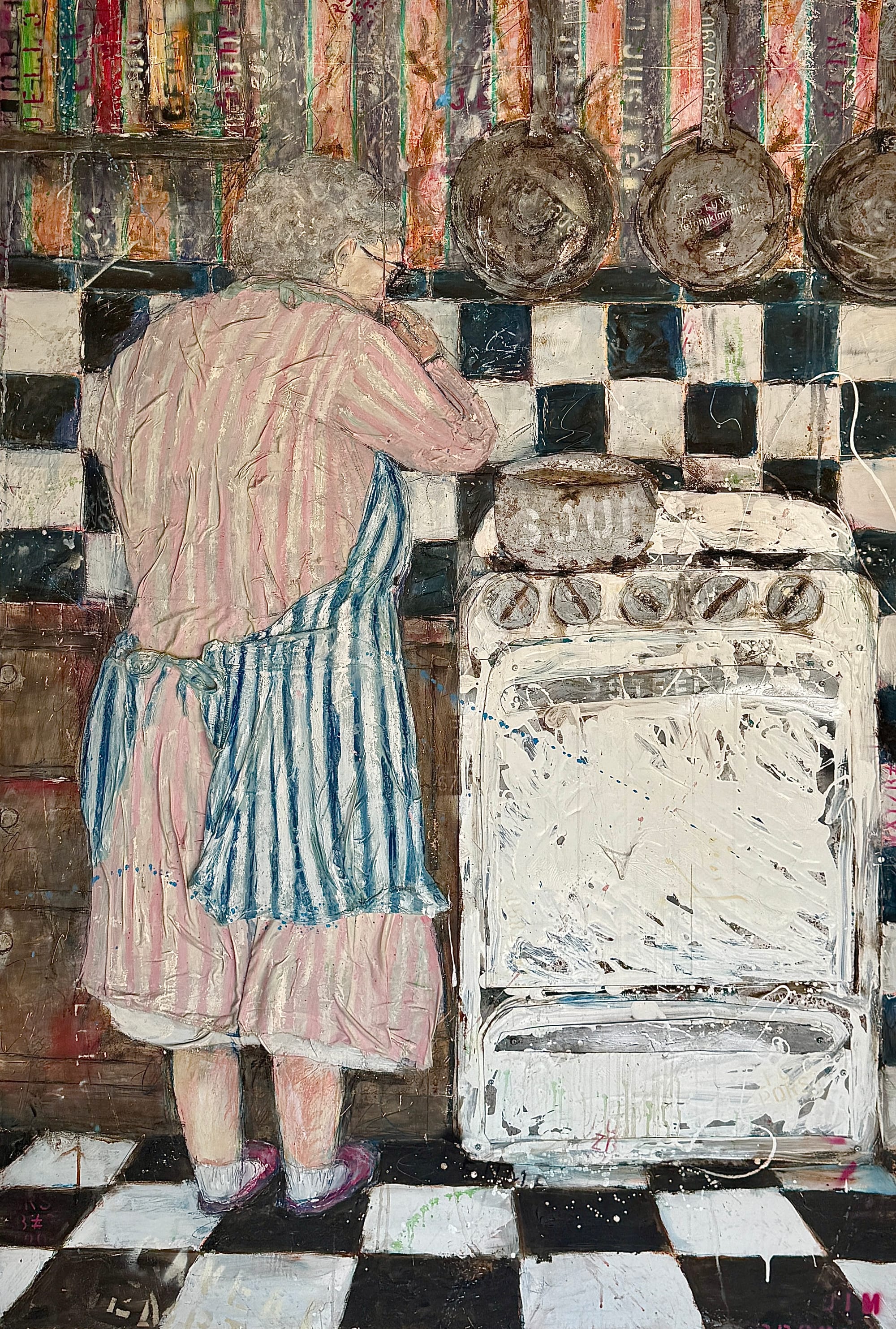
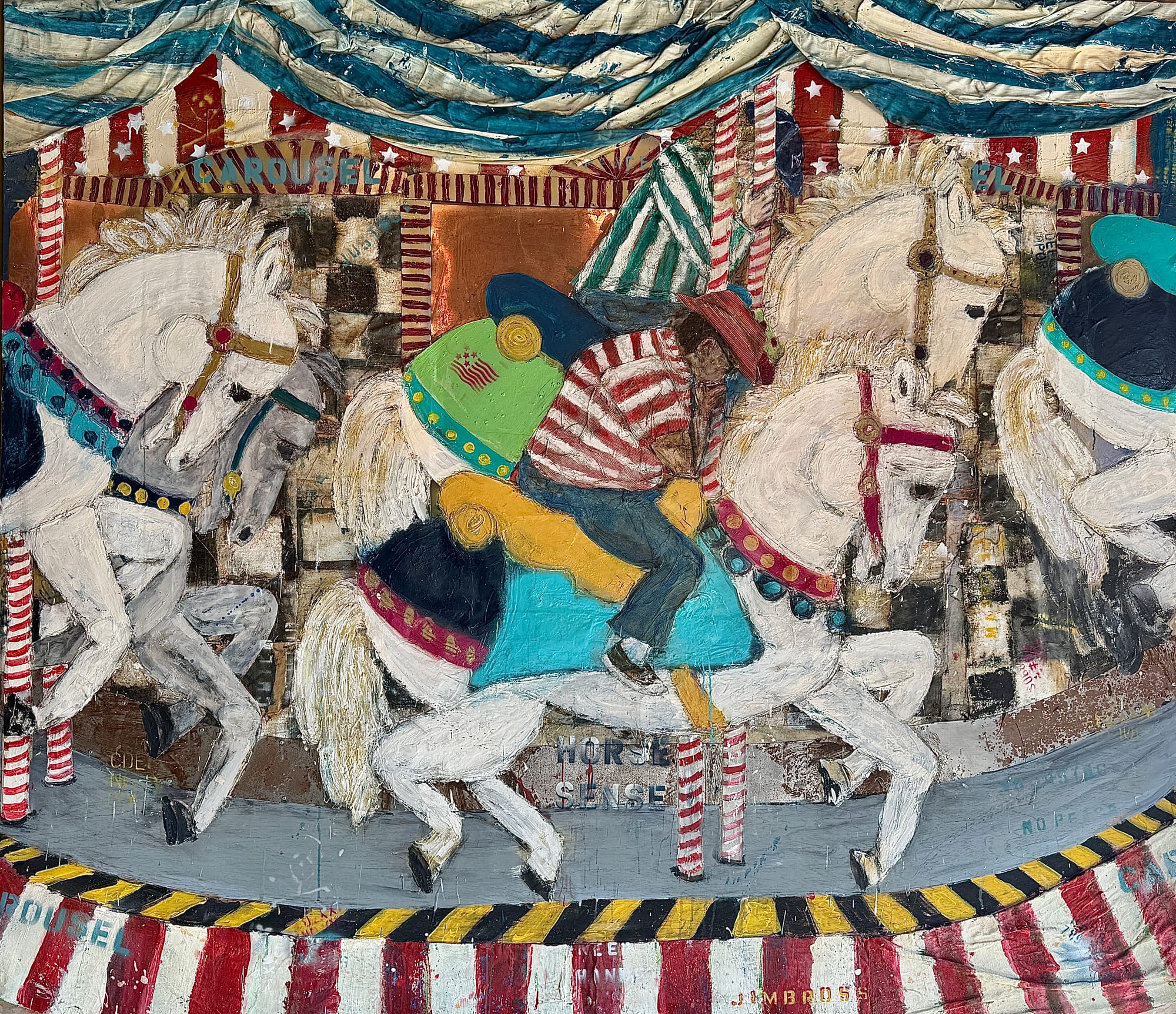
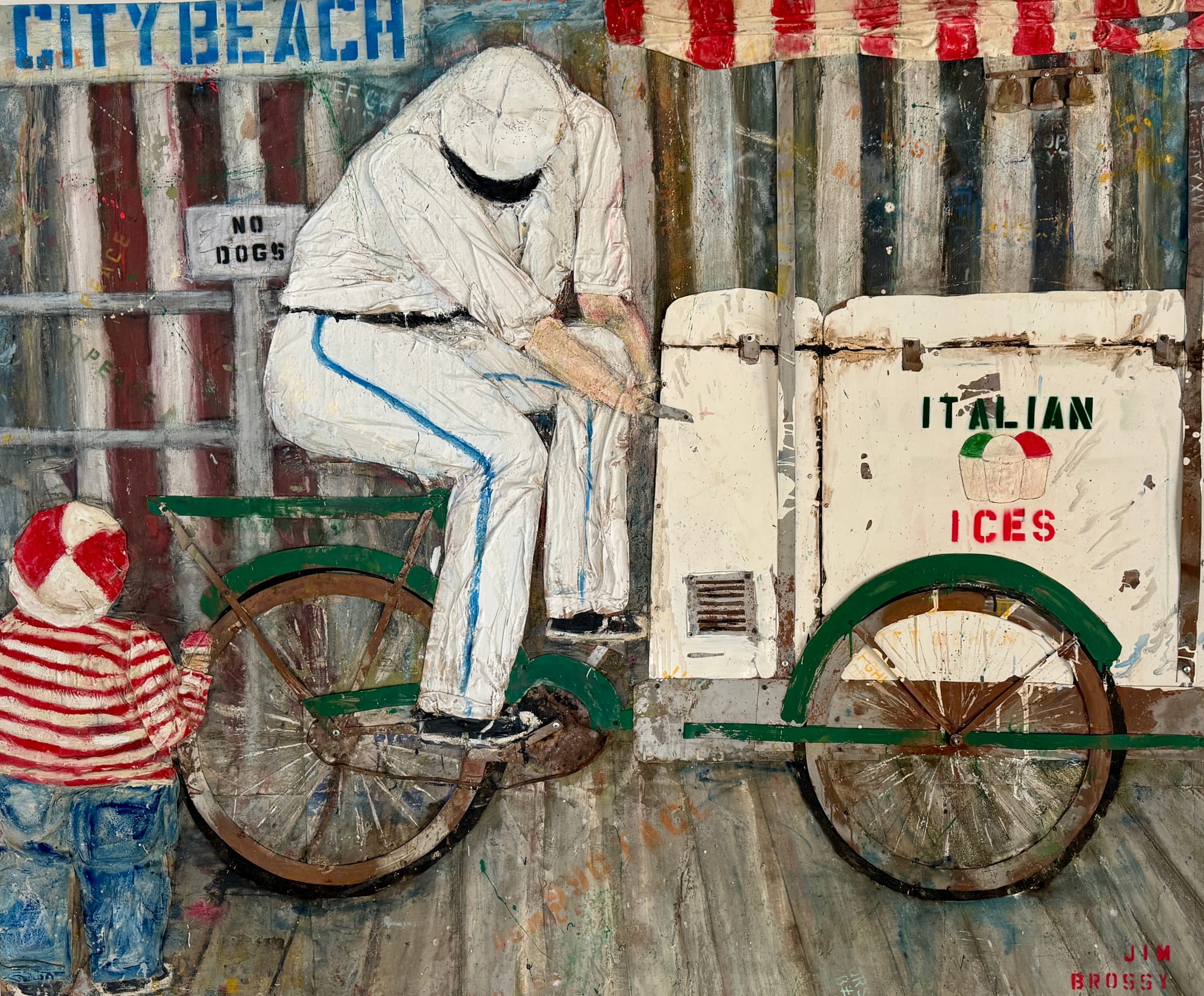
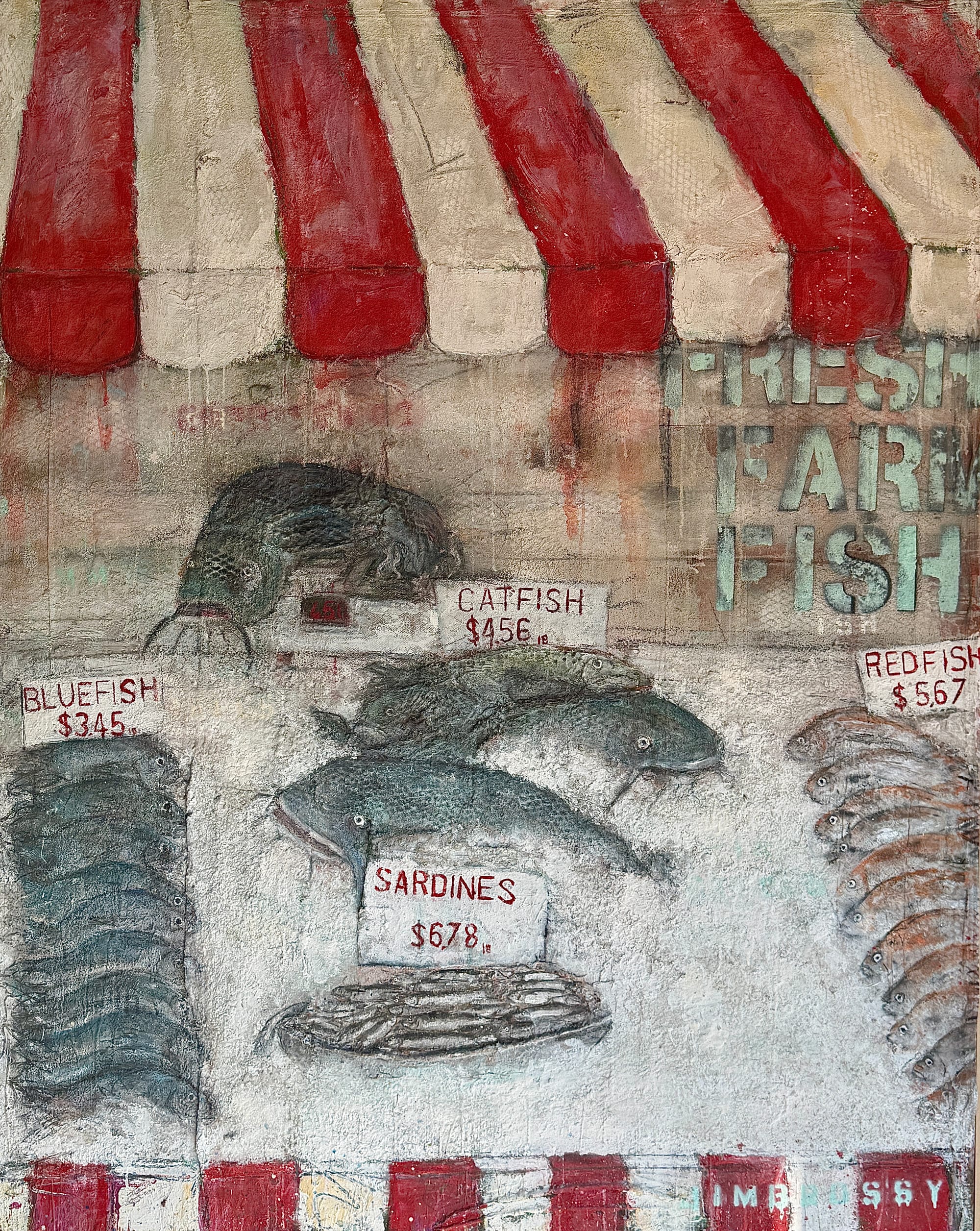
Clockwise from top: Grandma, Horse Sense, Italian Ices, Red Fish, Blue Fish
Through the combination of image and the written word, the paintings invite viewers to engage with them on multiple levels of interpretation. Crackpot Realism allows for interaction between physical materials and mental associations; viewers can experience a fresh new look with an unconventional perspective.
Born in New Brunswick, New Jersey, and raised in Edison, Jim Brossy relocated to Philadelphia in 1981, where he continues to live and work. His studio, now located in a new space attached to his home, is where he develops ideas and works closely with his materials. Brossy received a Bachelor of Arts in Visual Art from Livingston College at Rutgers University in 1979 and later earned a Master of Fine Arts from the Pennsylvania Academy of the Fine Arts in 1999. His education and years of studio experience shape the depth and structure of his work.
For Brossy, the work is not simply a representation of life but an object in a real space that can be experienced as a picture. With a distinctly urban visual language, the artworks engage contemporary social issues and injustices. Figures often emerge in materials reflective of their social status, a deliberate decision that strengthens the relationship between subject and substance.
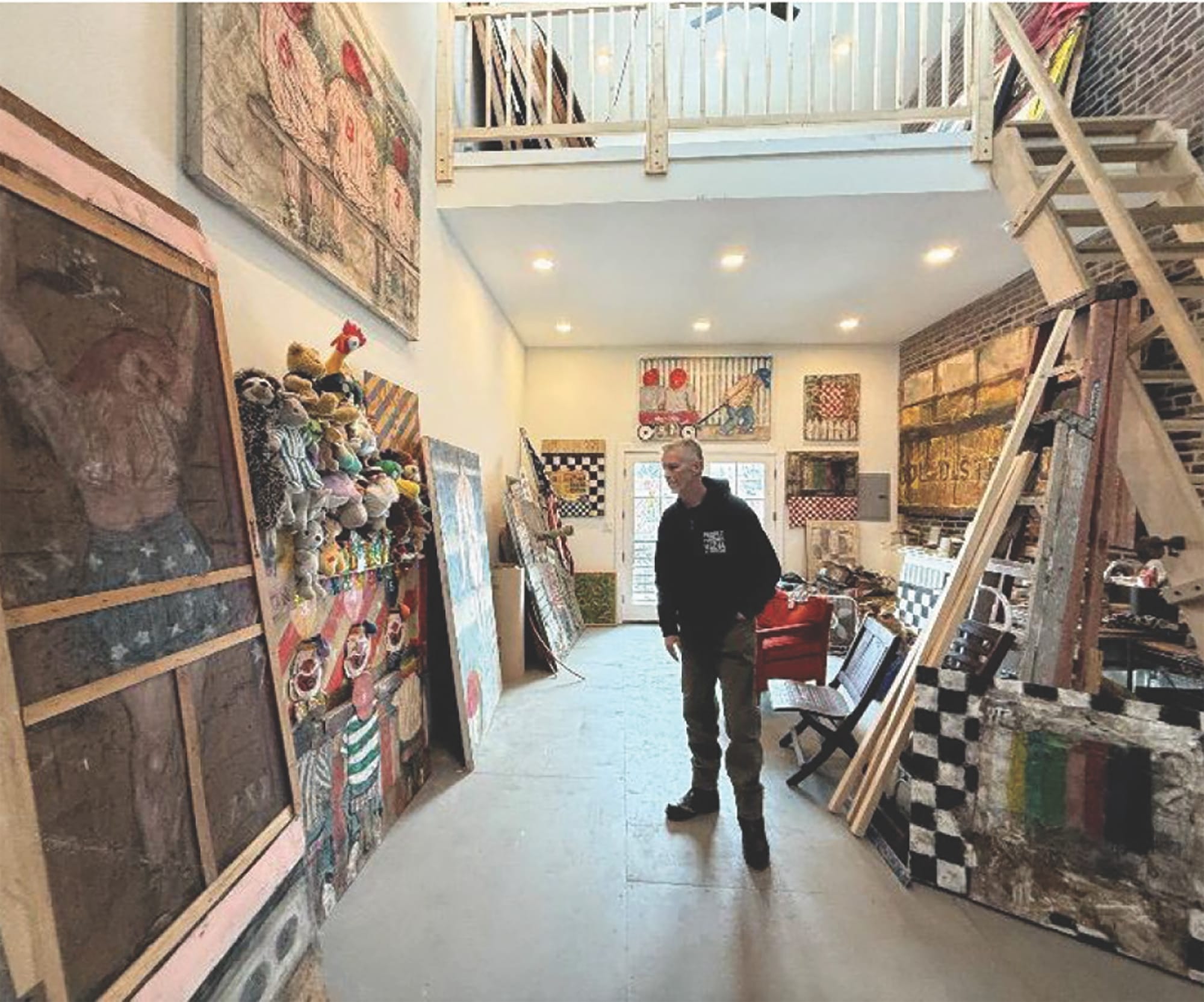
“Sassy” political references introduce both seriousness and humor, encouraging viewers to consider broader social concerns without becoming overwhelmed by them. The artist invites reflection but also insists that neither the viewer nor the work take itself too seriously. Process plays a central role in the exhibition. Brossy describes being drawn either to subjects directly in front of him or to distant memories triggered by current events. Patterns and geometry found within everyday objects become starting points, and careful attention is given to how materials relate and respond to one another. Ultimately, the works are built through a process of layering planes from back to front, mirroring what he describes as the structure of the universe itself. Each painting becomes both a constructed environment and visual narrative, inviting viewers to engage with it as a physical presence as much as an image.
Brossy makes paintings with the weight of the world in them, sometimes literally. The materiality of his work gives the surface physical gravity while the themes of humor, memory, and social tension create psychological weight.