Revolution NJ advances contributions to the commemoration of the 250th anniversary of the American Revolution in New Jersey. The partnership between the New Jersey Historical Commission and the nonprofit Crossroads of the American Revolution Association, RevolutionNJ (www.revnj.org), provides an opportunity for community engagement, education, and public discourse that explores the history of the American Revolution. As this nation’s most iconic symbol, the American flag symbolizes the sacrifices, divisions, and dreams of this country’s republic. Resolution by the Continental Congress on June 14, 1777, officially adopted the first official flag. There is considerable evidence that the first flag was designed by Pennsylvania Congressman, lawyer, composer, and author, Francis Hopkinson. Mary Pickersgill of Baltimore is credited with sewing the Star-Spangled Banner, which flew over Fort McHenry and inspired Francis Scott Key to write the national anthem. However, this daunting task could not have been achieved within its six-week deadline without the assistance of Grace Wisher, a 13-year-old African American indentured servant who lived and apprenticed for Mary as an opportunity to learn new skills.
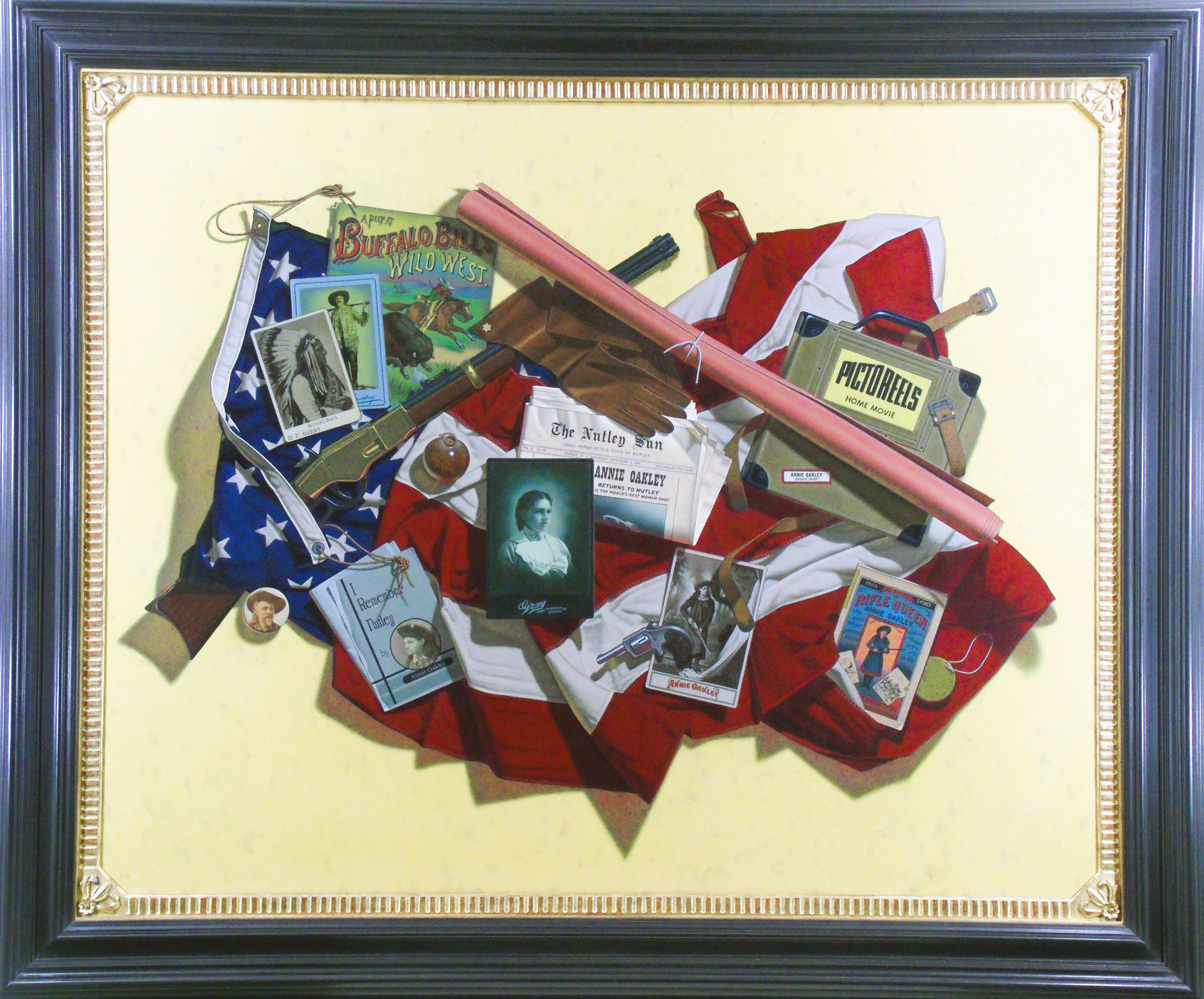
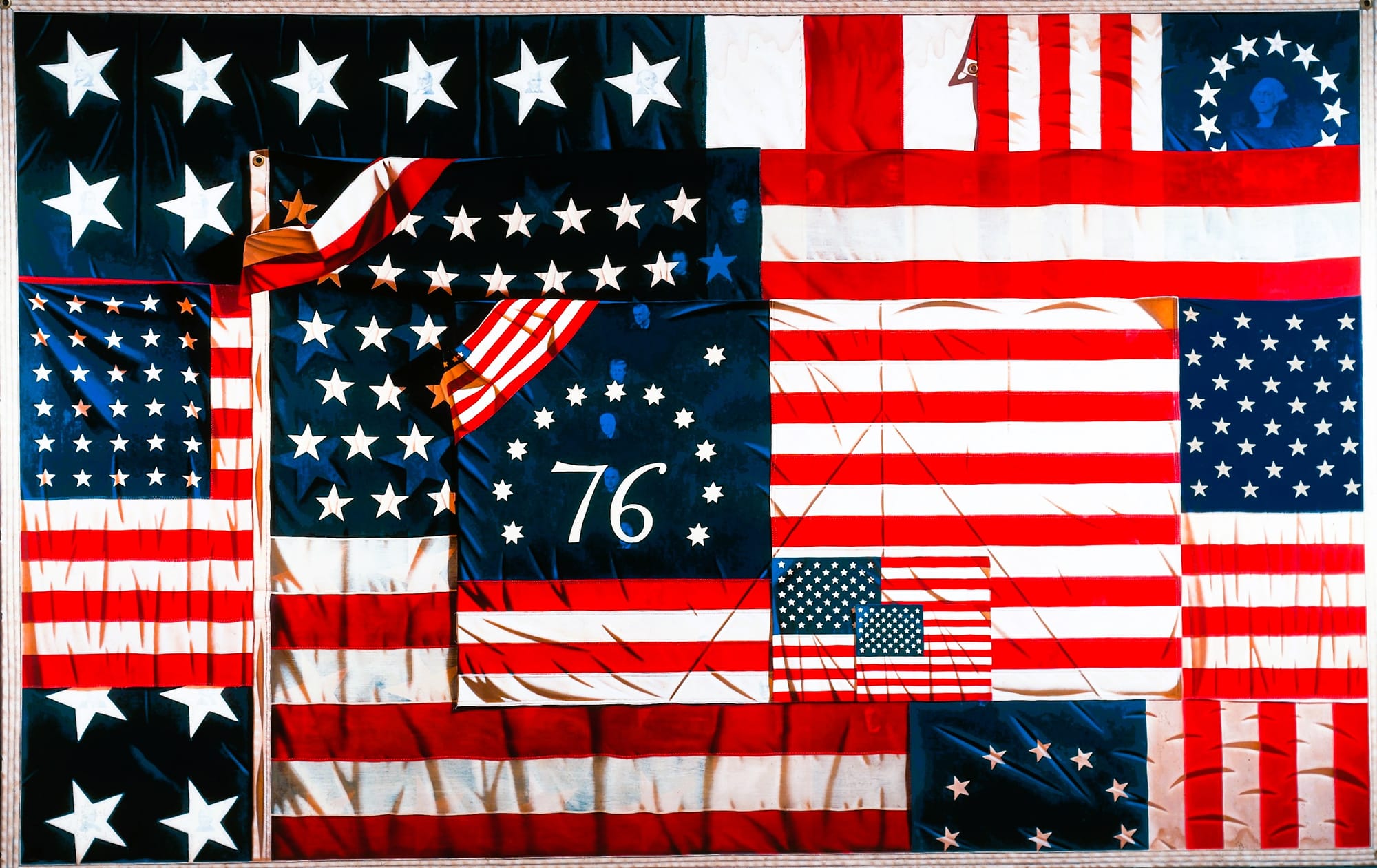
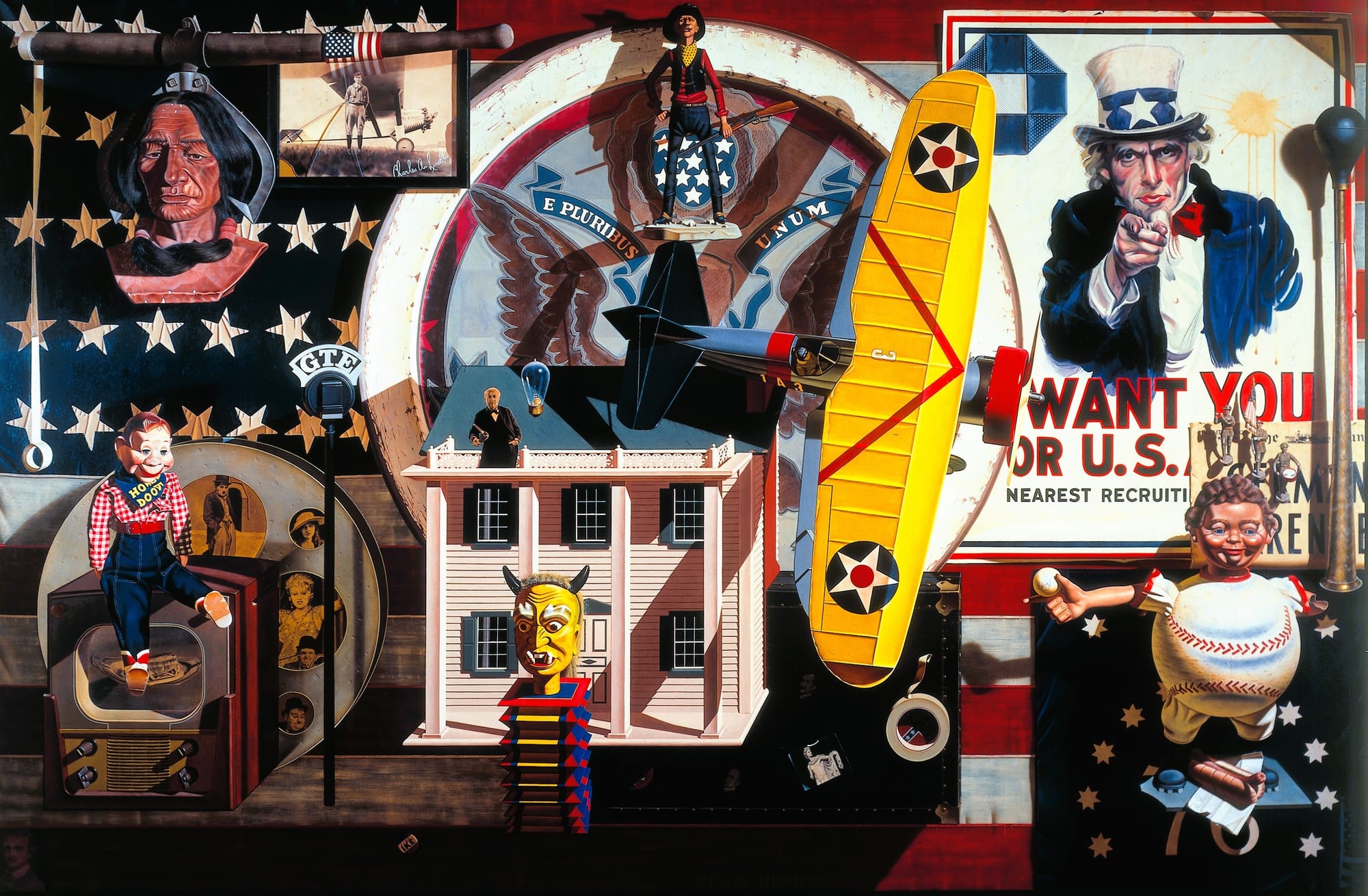
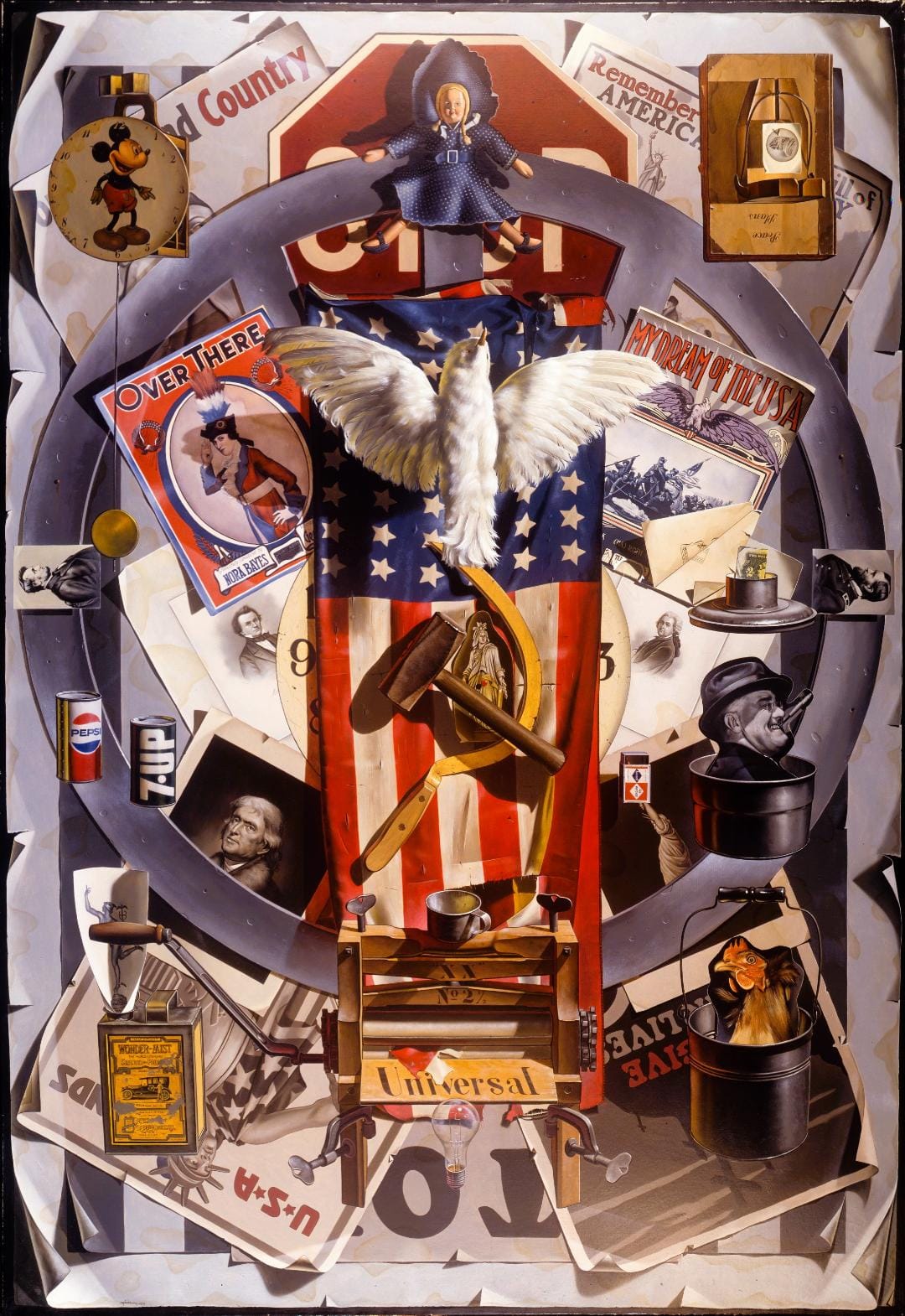
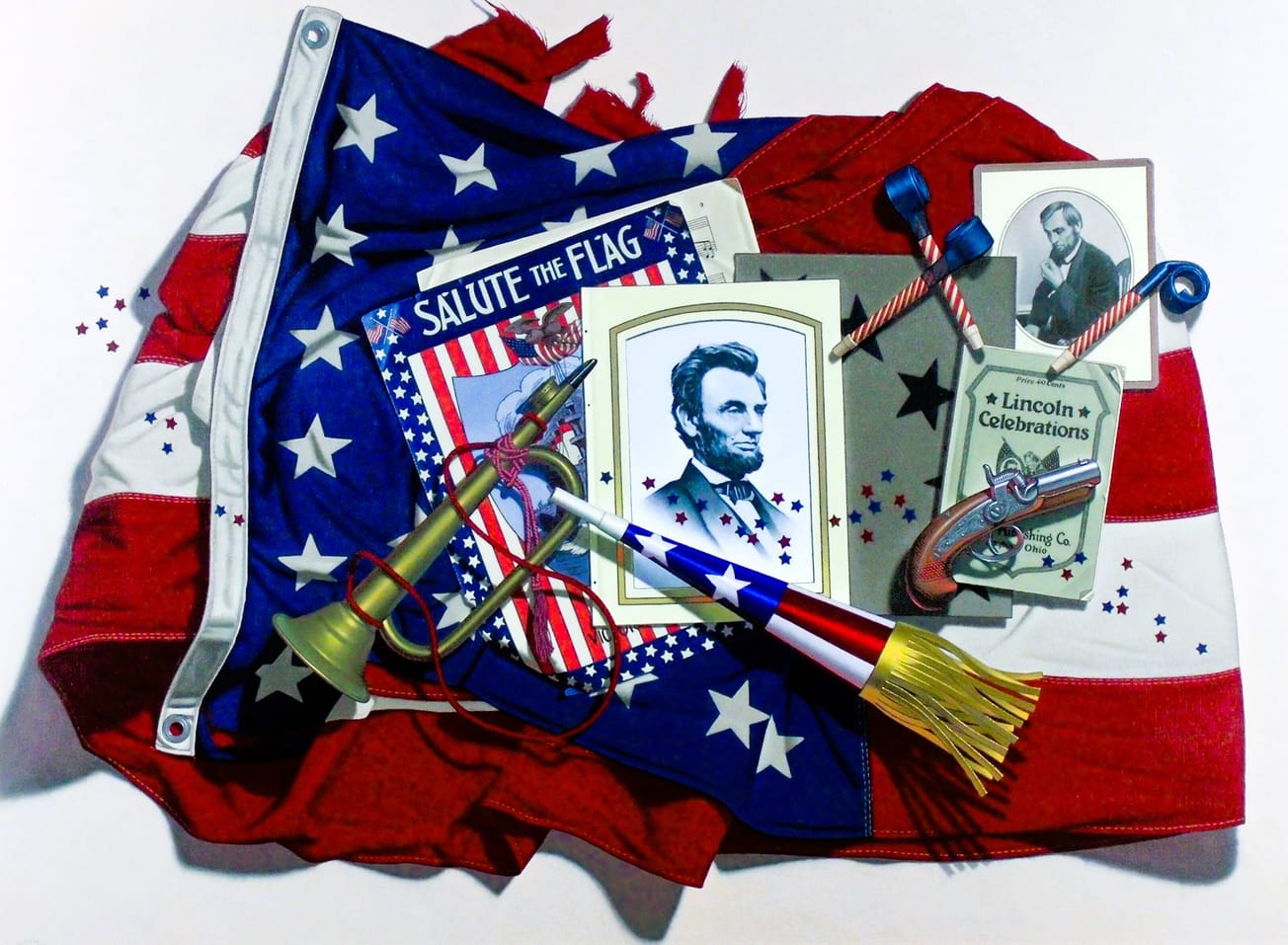
Clockwise from top left: A Little Sure Shot, Composition in Red, White and Blue, The Final Rinse, and Pieces of Time
New Jersey tromp l’oeil artist Gary Erbe is no stranger to creating art to commemorate historical moments. In 1974, as the country was making plans to celebrate the 1976 Bicentennial, marking 200 years of the United States, he decided to create two monumental easel paintings as his contribution to this historical moment. The painting “Composition in Red, White and Blue” was challenging for Gary to paint because of the limited palette of red, white, and blue. He approached the painting as a modernist with intentional placement of color and the composition of the flag design. “There is also more than meets the eye. Look closely, and you will discover 37 Presidential portraits throughout the composition, along with a peace symbol forming a circular pattern. This historical and contemporary painting also documents the evolution of the presidency and the American flag,” says Gary.
American identity, for Gary, is based on his appreciation for being blessed to live in a country where he can express his thoughts as he wishes. With such a strong interest in history, many of Gary’s paintings in his “American Series” incorporate highly recognizable symbols such as flags, toys, and cultural artifacts. Selecting which symbols to use and which to drive his narratives is based on the relationship between the subject matter and the content. Gary uses these playful objects to discuss serious themes. When asked why this juxtaposition was important, Gary said, “I was brought up in the 1950s and cherish that time in my life. Much of my work reflects my experiences in that time period.” When Gary was young, he lived in a world of imagination, with no computers, cell phones, or video games.” This upbringing fed his desire for exploration, and the canvas was his way of documenting the journey.
As a traditional trompe-l’œil painter, Gary’s career has focused on American popular culture and history. His painting, “Pieces of Time,” is monumental, measuring 65 x 100, and was featured in an exhibition organized by the Smithsonian titled “Democracy in America.” Looking at the painting, one can easily see Gary’s nostalgic feelings captured through historical pop-cultural icons like Howdy Doody, biplanes, baseball, and Charlie Chaplin, to name but a few. Oftentimes, Gary refers to his contemporary approach to trompe-l’œil, a technique he calls “Levitational Realism” because it creates the illusion of floating objects. Gary’s art has been featured in numerous exhibitions across the country, with many pieces in permanent collections, including the Butler Institute of American Art, the Brandywine River Museum, and the Noyes Museum of Art of Stockton University.
Support Lifestyle by shopping post Holiday Sales on Amazon