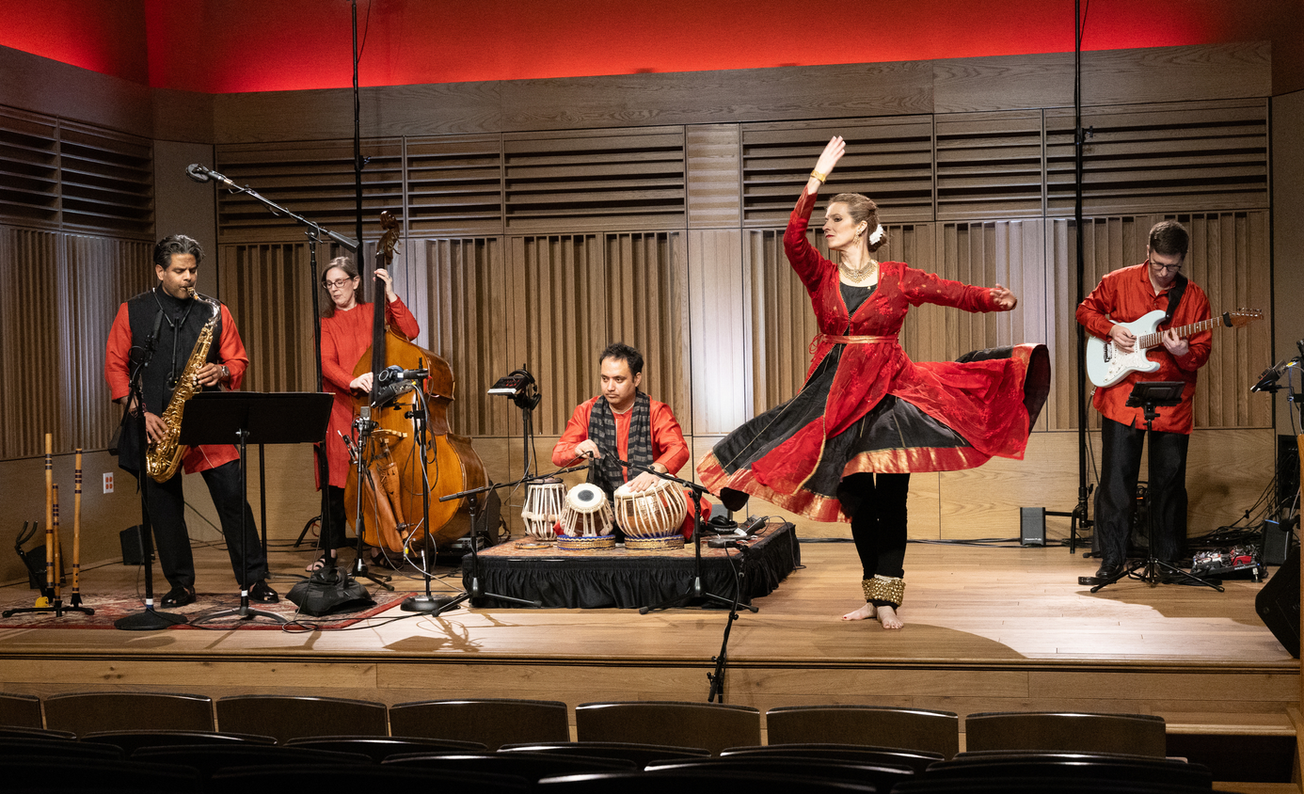
Flute, Tabla, Bass, Guitar and Saxophone Interwoven with Strings at Exhilarating Rhythms, Bay Atlantic Symphony’s May Concert
When a former saxophone player for the U.S. Army Field Band inspires a California-born jazz conductor to compose a concerto for Indian instruments and classical string orchestra, the result is an enticing case study in cross-cultural collaboration.
Nightfall Rhapsody is presented by Bay Atlantic Symphony with traditional music and Kathak dance performed by the Temporal Taal Collective, a Hindustani jazz group, as part of its final concert of the season Exhilarating Rhythms. Paired with Ludwig van Beethoven’s Symphony No. 7, the two pieces offer musical contrasts — and parallels — that add up to an engaging multicultural journey.
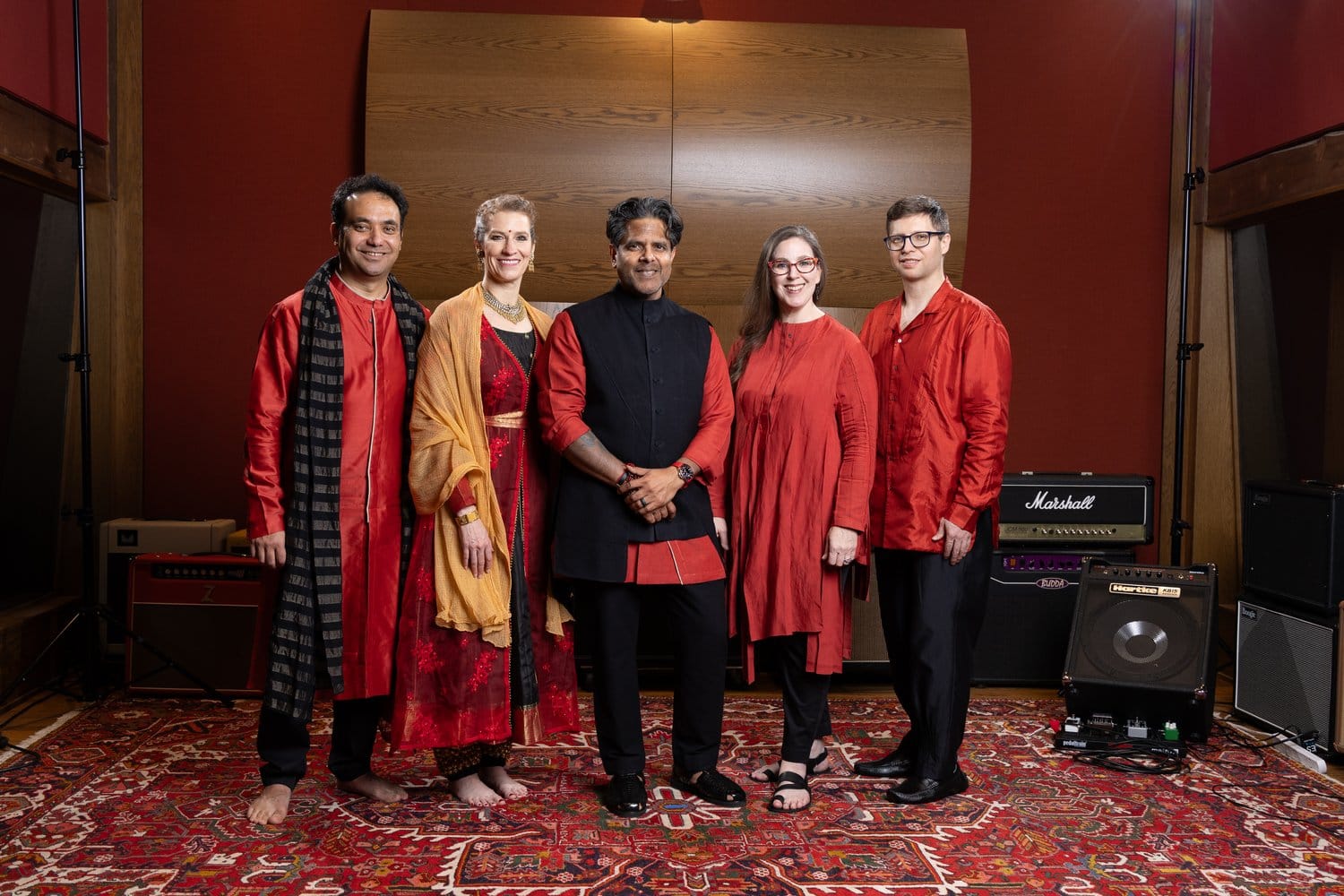
Anjan Shah and Drew Zaremba, who collaborated to create Nightfall Rhapsody, have much in common. Both play saxophone and flute, love jazz, lead bands and compose music. Yet it’s hard to put their interests in a specific musical box.
Shah played in 600 concerts with the prestigious Army Band but is now more likely to pick up the bansuri flute to share Hindustani music with the Temporal Taal Collective.
Zaremba initially studied classical piano, later transitioning to jazz. “When I was three, I told my parents I wanted to learn every instrument in the world,” he said. Now he teaches jazz composition at the University of Northern Colorado and enjoys performing, conducting and writing music that crosses cultural divides. “Music is too interesting to just do one thing forever,” he said.
Reconciling Heritage with Music
Shah had once resisted his father’s pressure to embrace Indian music, but following his father’s death he felt a pull back to his cultural roots. Listening to devotional music at a COVID-delayed memorial ceremony, he “started to understand the depth and nuance of the music he had been trying to share with me for years.” Shah says, “I realized I wanted to pursue a way of reconciling my background in Western chamber music and jazz with my Indian heritage through music.”
While working on a recording project with Bay Atlantic Symphony Music Director Jed Gaylin, he shared the idea of bringing Hindustani music, Western classical and jazz together in an orchestral setting. Gaylin was very supportive of the approach.
Shah had heard about Drew Zaremba and a project he had done blending Chinese opera and jazz. The two talked about applying a similar approach with Hindustani music. “He wasn’t just borrowing sounds — he was taking the time to understand the musical language from the inside,” Shah said. He helped fund a year of study in Hindustani music for Zaremba, who took classes, learned the bansuri flute and jammed with a tabla (drum) player before starting his composition
Zaremba says Shah gave him freedom to write, providing only occasional feedback as the piece progressed. “We settled on a raag (a melodic pattern) and a taal (rhythm),” says Zaremba. “I wanted to make sure it was playable and fun for the musicians. But we also wanted something the audience would enjoy and not just feel they were being challenged over and over.” Zaremba, of course, added the jazz elements typical of his compositions.
Drawing the Listener in Gradually
Early in the project there was some concern that people who came to hear Beethoven, the other part of the program, wouldn’t like the piece. Nightfall Rhapsody is paired with Beethoven’s Symphony No. 7 for the Bay Atlantic Symphony concert. Zaremba says the audience can find similar patterns in the diverse selections. “Both start with a one-note melody and slowly grow” to become more intense.
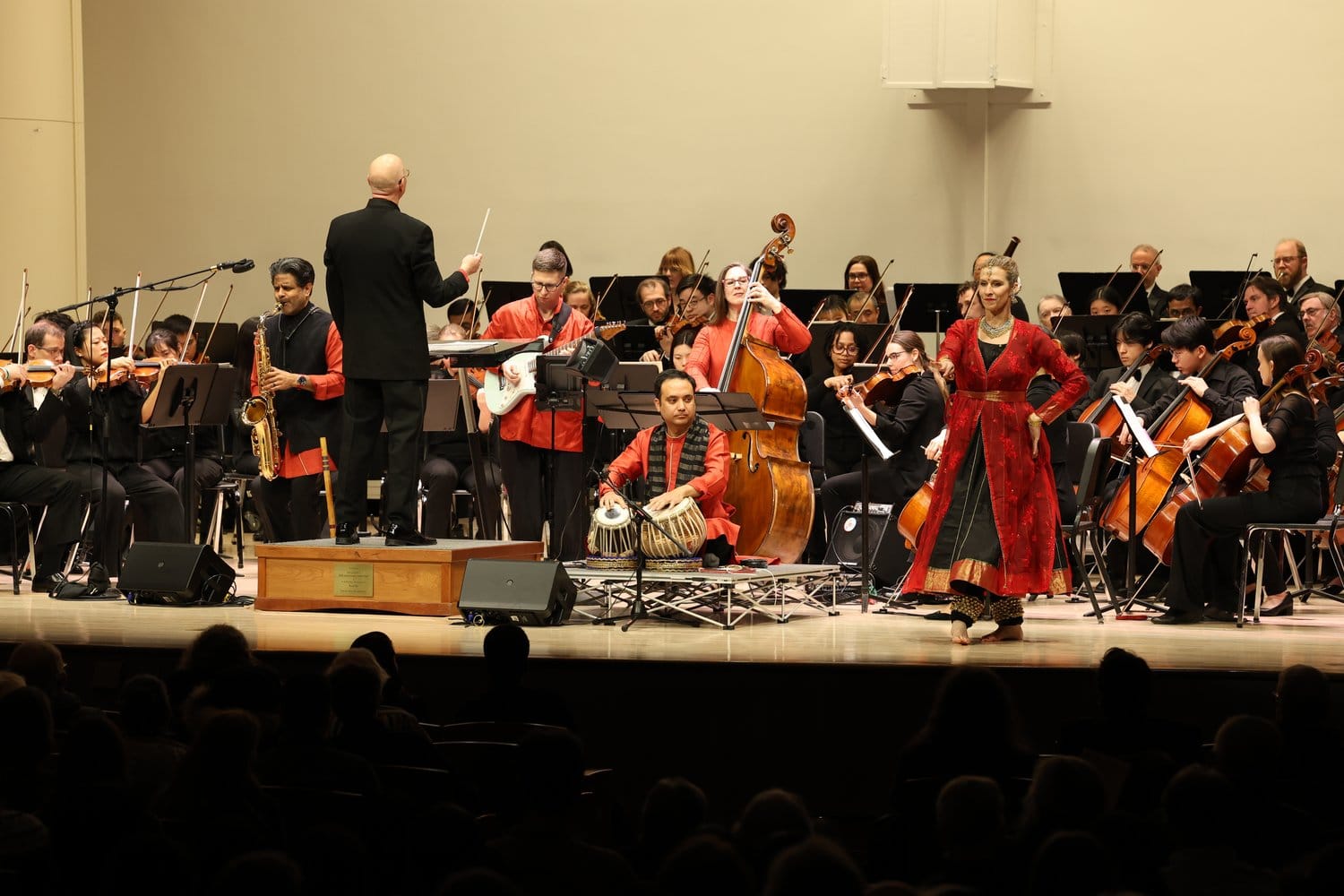
Nightfall Rhapsody is typical of Hindustani music. It starts softly and gets more complex as the tempo and complexity builds and the soloists trade melodies back and forth. Temporal Taal’s flute, tabla, bass, guitar and sax are interwoven with the Bay Atlantic Symphony strings to present an intentional blend of different musical traditions. Adding Kathak dance is a common feature of Hindustani music and dancer Sarah Morelli helps audiences hear the music in a new light.
Even if someone has never heard Hindustani music or doesn’t typically attend symphony music concerts, they can follow the arc, says Shah. “It feels more like a journey than something you have to intellectually decode.”
He says this piece was written specifically with the intent of bridging Indian and American cultures. “So many American-born Indians here are struggling,” says Shah. “It’s great for the audience to understand that music brings people together.” Shah, through his orchestral collaborations as well as his marketing career, feels a calling to weave stories that cross borders and invite others to reflect on their own roots.
The piece has been performed several times and Shah says the feedback has been positive. “Symphony musicians have been playing the standard European repertoire for so long. This has brought a different cultural spin.”
“Whether drawn by Beethoven or curiosity, listeners may find themselves leaving with something unexpected: a deeper connection to music that feels both global and deeply personal,” Shah said.
Bay Atlantic Symphony’s Exhilarating Rhythms concert is performed on Saturday, May 2, at 3 p.m. at Rowan College of South Jersey in Vineland and Sunday, May 3, at 2 p.m. at Stockton University’s Performing Arts Center in Galloway Township.
For tickets and information: https://www.bayatlanticsymphony.org