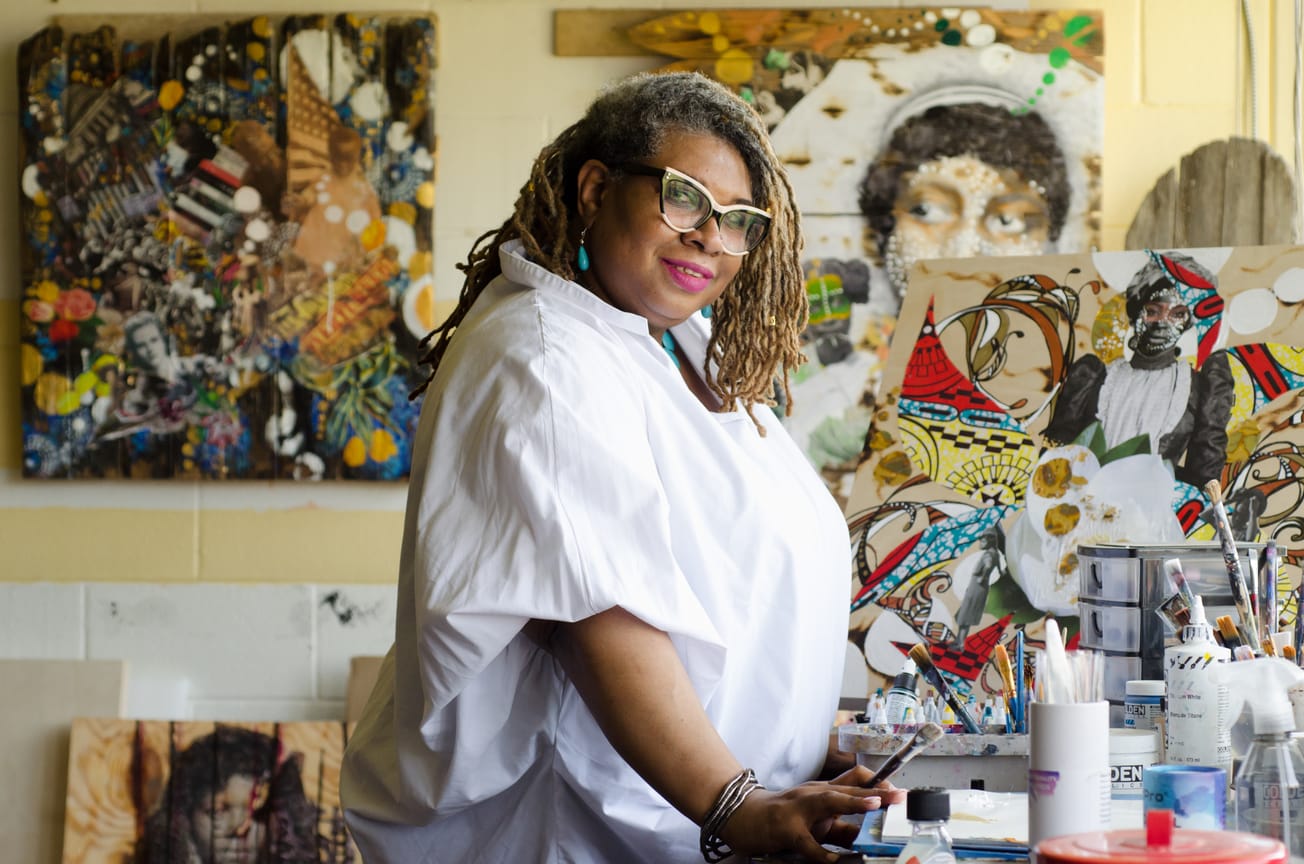
Artist Lavett Ballard’s work is a visual anthropology that brings history to life through personal genealogy of Black experiences. By using reclaimed fence wood and applying photographic collage, she layers narratives of Black womanhood rooted in memory and history. With these domestic materials, dominant historical frameworks are challenged to become a tactile living archive. Resistance, reflection, and cultural preservation guide Ballard’s vision, inviting viewers to shape their identity and sense of belonging. From her studio in Willingboro, her work has traveled the country and has been commissioned twice as the cover for Time magazine. In addition to role as an artist, Ballard is a prolific curator, author, and art historian. She holds a dual Bachelor’s in Studio Art and Art History with a minor in Museum Studies from Rutgers University, and an MFA in Studio Art from the University of the Arts in Philadelphia.
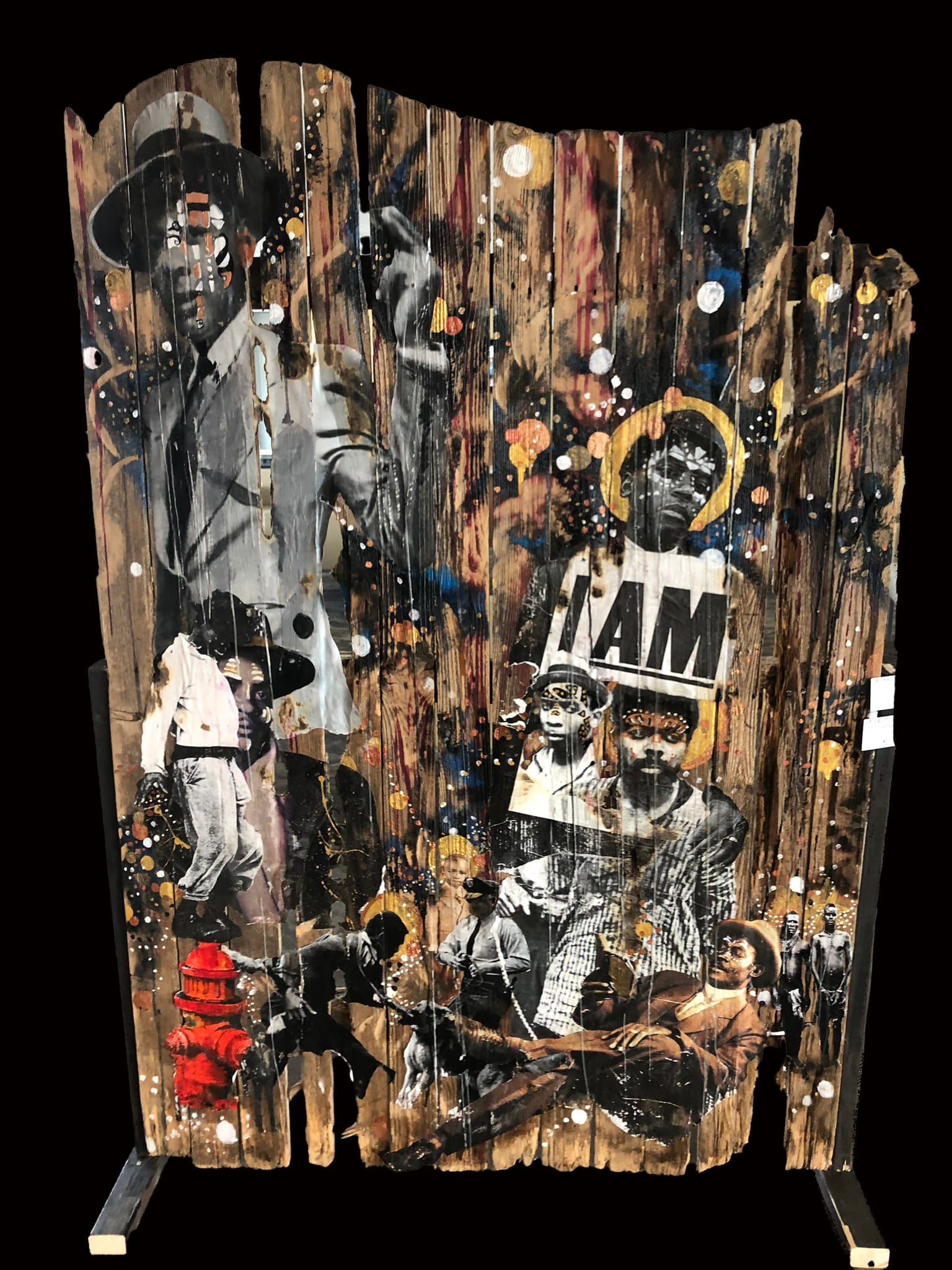
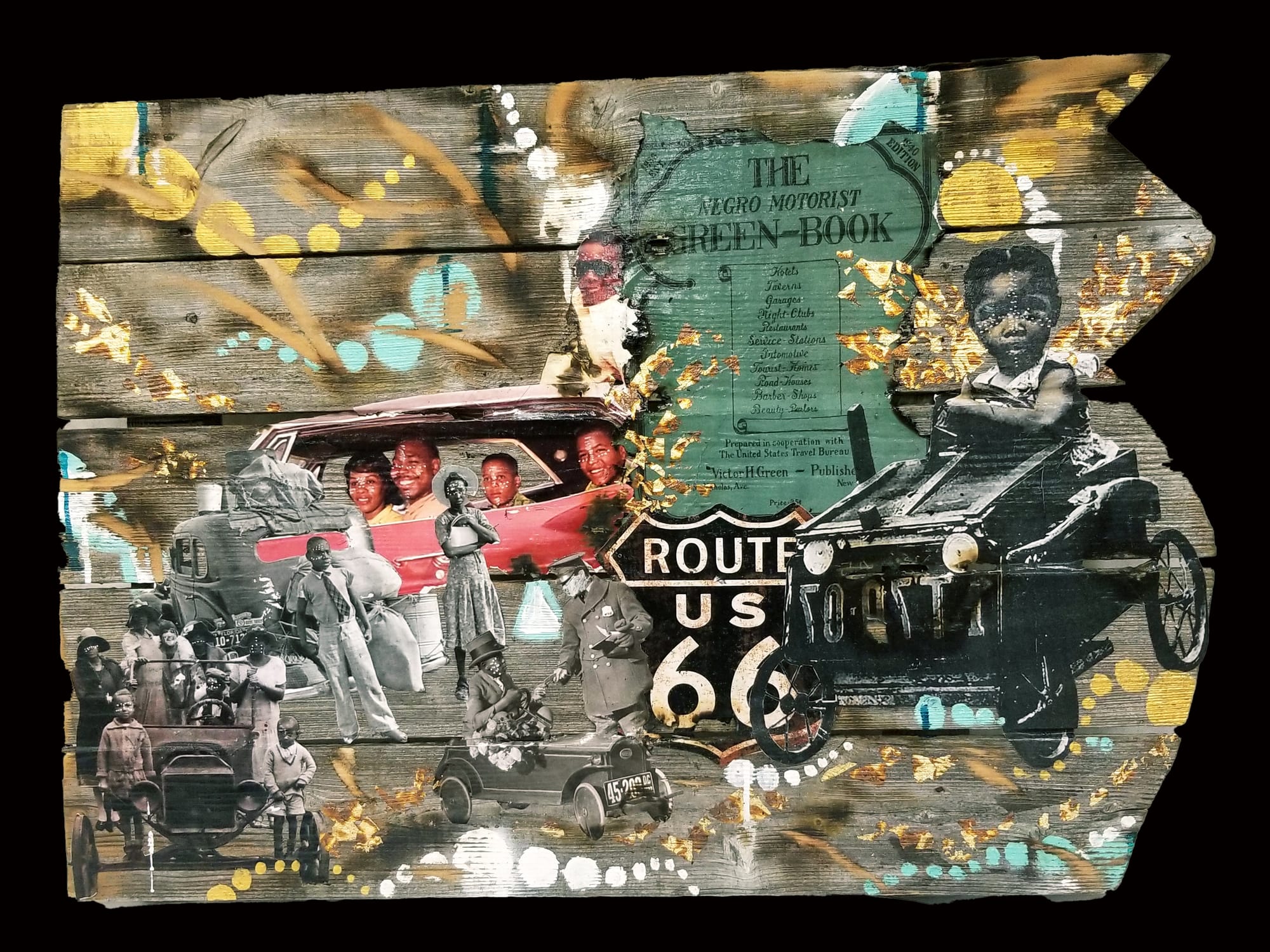
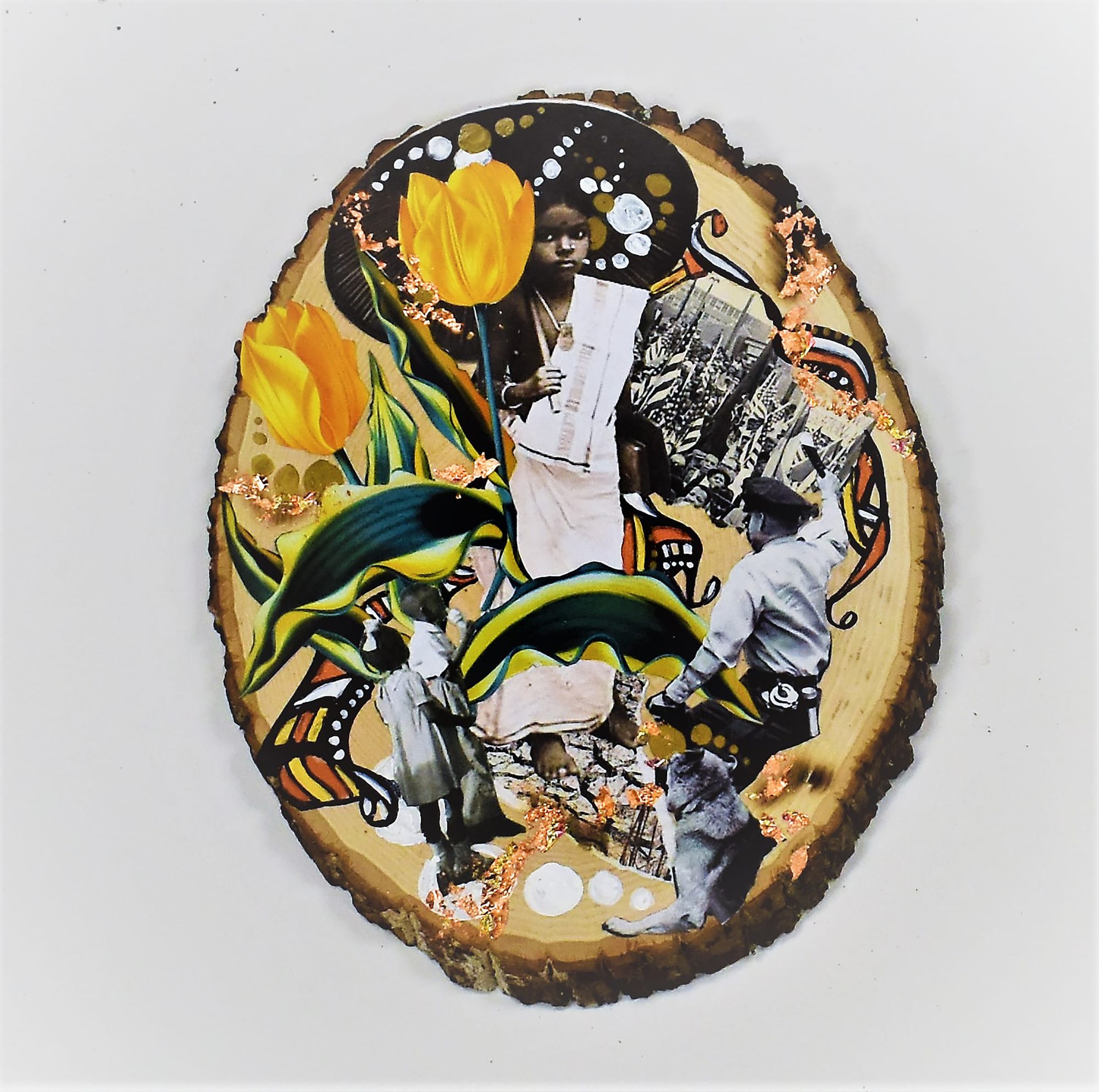
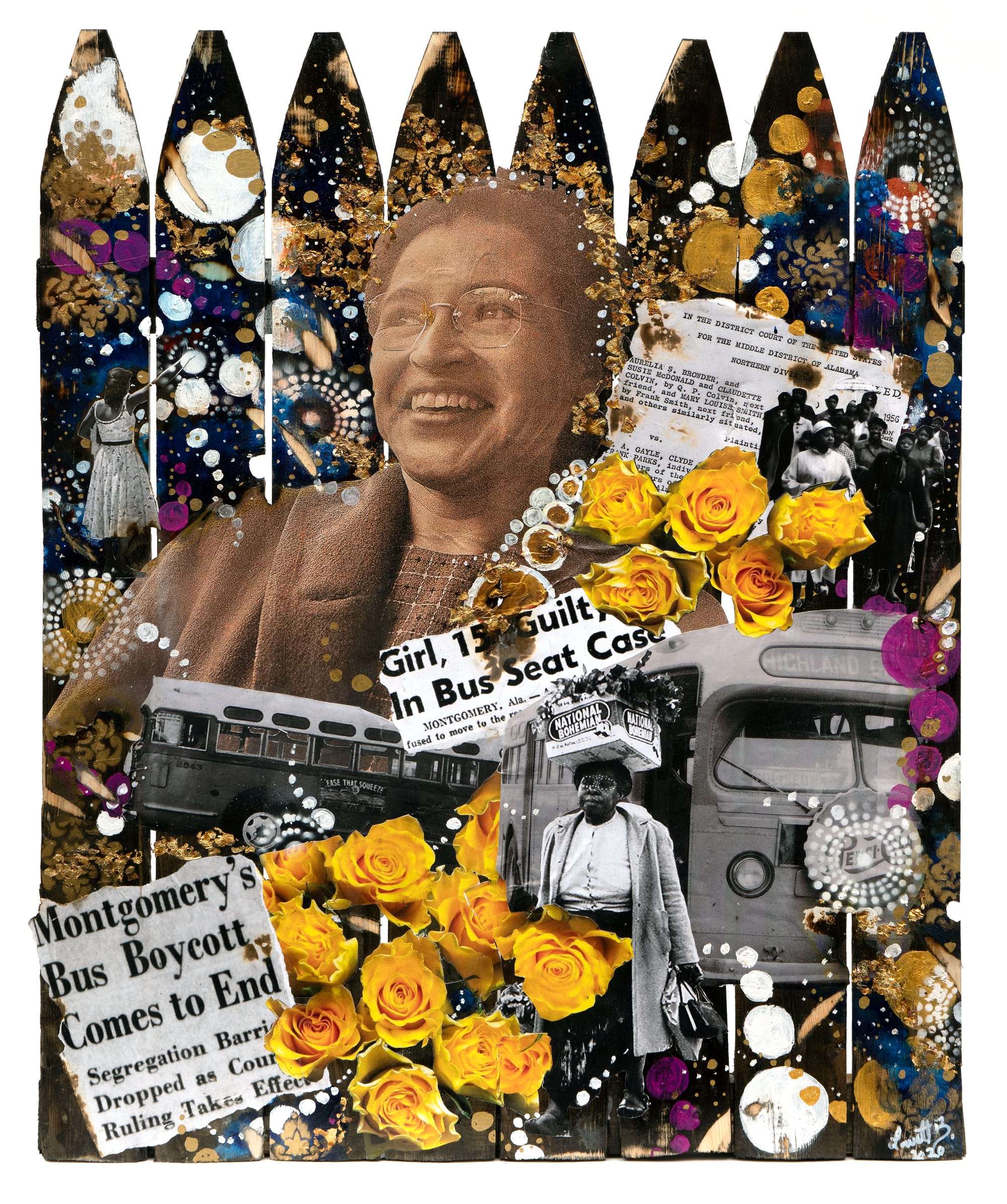
Clockwise from top left: Brothers in the Mist, Greenbook Diaries, Caste Away, We Shall Not Be Moved
Inspiration comes to Ballard from many sources, like books, social media, and conversations. It also comes from those special moments in a film or television that linger and spark deeper insight. Through research, exploration of topics such as “Black maternal mortality, Black elite life in the 20th century, or memories of growing up in the 1970s” allows personal history and collective experience to overlap. The visual journey becomes the next step as Ballard hunts for archival images and ephemera to softly narrate these stories, “especially those that restore visibility and dignity to overlooked lives.” Her work often centers on ancestry and the multiplicity of identity. Ballard uses her own genealogy to shape not only her work but also her understanding of what it means to be an artist. “I feel an obligation to use my talents in service of my family and community to create work that speaks deeply to the African American experience.” With a strong voice and sense of direction, guided by research, she has highlighted how identity shifts from one-dimensional to the complex, often evolving three-dimensional. For Ballard, this “invites broader audiences in through visual empathy and shared humanity.”
Much of Ballard’s practice incorporates repurposed materials such as wooden fences, aged photographs, and found objects. These materials drive the process of reclaiming narratives. For example, fences serve the purpose of keeping people in and out, just as social identities do. As a child, Ballard would travel, usually by Greyhound bus, from New Jersey to their family property in Lynchburg, Virginia. Once there at the “Big House,” a log cabin held in the family for generations, they would clean and prepare for the annual Labor Day gathering. “As I wiped down wood-paneled walls and dusted framed photographs of relatives past and present, I listened to my elders and cousins share family stories, memories, history, and moments that never made it into textbooks. That environment, especially the wood itself, left a deep impression on me. Wood holds history in its grain.” As Ballard uses these reclaimed materials, she returns to that time and space, connecting the stories of the past to the present. “It’s a way of honoring lived experience and quietly challenging whose histories are remembered and preserved.”
These are complicated and challenging times, with a political climate that embraces erasing and distorting history for convenience. As a woman artist of color, “I feel those pressures very personally, especially as DEI initiatives are rolled back in ways that silence both presence and story.” Ballard’s role as a contemporary artist has been documenting, correcting, and expanding cultural memory for communities historically left out of mainstream narratives. For Ballard, art extends way beyond making something beautiful. It’s about creating that necessary space for recognition and humanity. The statement by American pianist, singer, songwriter, and civil rights activist Nina Simone, “It’s an artist’s duty to reflect the times in which we live,” motivates Ballard to use her art to “expand cultural memory so that more people can see themselves reflected in it, and understand how deeply connected we are.”